
Uncategorized
Does Fryd Have THC? Does It Get You High? Does It Have Weed?
Sep
Table of Contents
Does Fryd Have THC?
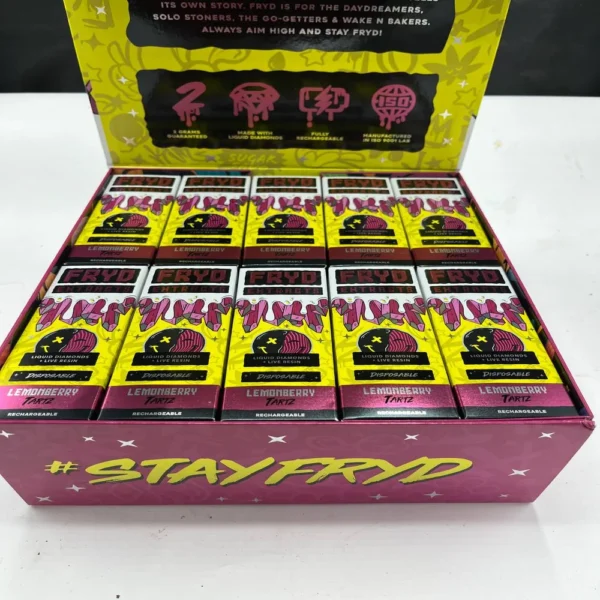
Yes — based on Fryd’s own product marketing, its vape carts and disposables are built around THC-family cannabinoids. The brand’s lineup includes products described as containing Delta-8 THC, HHC, and THCA, along with live resin blends, with some product descriptions citing very high potency figures.
But “THC” isn’t one single ingredient, and this is the detail that trips up most buyers. There are several distinct cannabinoids in the “THC family,” and Fryd’s catalog spans more than one of them:
- Delta-9 THC is the compound most people think of by default — the main psychoactive ingredient in traditional cannabis, federally controlled in the U.S. except through state cannabis programs.
- Delta-8 THC is chemically similar but milder, and almost all commercial Delta-8 is synthesized from hemp-derived CBD through a chemical conversion process, since it barely exists naturally in the plant.
- HHC (hexahydrocannabinol) is a hydrogenated THC variant, also typically manufactured synthetically from hemp CBD.
- THCA (tetrahydrocannabinolic acid) is the non-intoxicating compound found in raw, unheated cannabis — it converts into intoxicating Delta-9 THC when heated, which is exactly what happens when it’s vaped.
So when a Fryd product’s label says Delta-8, HHC, or THCA, it’s technically accurate to say it contains THC or a THC-derived compound — just not necessarily the same Delta-9 THC found in traditional flower or dispensary vape products.
Does Fryd Get You High?
Generally, yes — but the intensity and type of high depends heavily on which specific cannabinoid a given product contains, and that’s genuinely hard for a buyer to verify with confidence.
Here’s roughly what to expect from each cannabinoid type Fryd has marketed:
- THCA carts get you high in essentially the same way traditional THC does, because heating converts the THCA into Delta-9 THC as you inhale it. Marketing describing “strong effects” for THCA-based Fryd products is consistent with this chemistry.
- HHC is generally described as producing a euphoric or relaxing high, often compared to a milder version of a Delta-9 experience, though individual response varies.
- Delta-8 is typically described as producing calmer, less intense psychoactive effects than Delta-9, though “less intense” doesn’t mean negligible — many users still describe a clear high, especially at higher doses or with frequent use.
The bigger complication here isn’t the chemistry in theory — it’s whether the product you actually receive matches what the label says. This matters more for Fryd specifically than it would for a regulated dispensary product, for reasons covered below.
Does Fryd Have Weed?
This is really the same question as “does it have THC,” but phrased around the plant itself — and the honest answer is: it’s complicated, and probably not in the way people picture “weed.”
None of Fryd’s marketed cannabinoids (Delta-8, HHC, or THCA) are typically extracted directly from smokable cannabis flower. Delta-8 and HHC are manufactured, not simply extracted — they’re produced by chemically converting CBD (which itself is usually derived from legally grown industrial hemp, a cannabis plant variety bred to contain minimal Delta-9 THC). THCA does come from the cannabis/hemp plant more directly, since it’s the natural, non-heated precursor compound found in raw plant material, but the products sold under that label are still typically distillates or concentrates rather than flower itself.
So if “does Fryd have weed” means “is this literally cannabis flower,” the answer is generally no — these are concentrate and distillate products, often built from hemp-derived, chemically processed cannabinoids rather than dispensary-grade cannabis extract. If the question means “does it contain a compound derived from the cannabis plant that produces cannabis-like effects,” then yes, that’s essentially accurate.
Why the Legal Status Is Genuinely Confusing
The reason Fryd and similar brands can market Delta-8, HHC, and THCA products so openly comes down to a specific legal loophole. The 2018 U.S. Farm Bill defined legal hemp based on its Delta-9 THC concentration by dry weight — meaning products derived from hemp, even if converted into other psychoactive cannabinoids like Delta-8 or HHC, have historically fallen into a gray area distinct from how Delta-9 cannabis products are regulated.
This gray area is exactly why these products can be sold at gas stations and vape shops in states where recreational Delta-9 cannabis remains illegal. But “legal gray area” doesn’t mean “consistently legal everywhere” — state laws on Delta-8, HHC, and THCA vary widely, and a number of states have moved to specifically ban or restrict these compounds even while regulated medical or recreational cannabis programs exist alongside them. Checking your specific state’s current rules before buying is genuinely necessary, not just a formality.
The Question Underneath the Question: Can You Trust the Label?
This creates a real problem for anyone trying to answer “does Fryd have THC” with confidence: even setting aside what an authentic Fryd product is supposed to contain, there’s a substantial chance that any given Fryd-branded cart — especially one bought from an unofficial retailer, gas station, or resale listing — isn’t authentic at all, and may not contain what its packaging claims.
Fryd’s own marketing states that its products go through third-party lab testing for cannabinoid content and contaminants, viewable via a QR code on the packaging. If genuine, that’s a positive practice — but because Fryd operates outside a state-regulated cannabis testing system, and because counterfeiters have specifically targeted this brand, that verification ultimately rests on trusting the seller and the packaging rather than an independent government-audited process.
Why This Matters Beyond “Will I Get High”
This isn’t purely an academic distinction. In 2019, the FDA issued a public warning urging consumers to stop using THC-containing vape products entirely, amid a nationwide outbreak of severe vaping-related lung injuries (EVALI) that resulted in over 1,000 documented cases and dozens of deaths across the U.S. The CDC later identified vitamin E acetate — a thickening agent sometimes used to dilute THC vape oil — as strongly linked to that outbreak. Notably, most of the patients affected had reported using THC products obtained through informal or unregulated channels rather than licensed dispensaries.
That history is directly relevant here, because it illustrates the actual risk behind “does Fryd have THC” as a question: it’s not just about whether you’ll feel high, it’s about whether an unregulated product — genuine or counterfeit — might contain undisclosed additives, inconsistent potency, or contaminants that a properly regulated dispensary product would be tested against by law.
Bottom Line
- Does Fryd have THC? Yes — its marketed lineup includes Delta-8 THC, HHC, and THCA, though these aren’t identical to traditional Delta-9 THC.
- Does Fryd get you high? Generally yes, with the intensity depending on which specific cannabinoid a given product contains — assuming the product matches its label.
- Does Fryd have weed? Not typically in the sense of raw cannabis flower — these are manufactured concentrates and distillates, often derived from hemp through chemical conversion rather than extracted directly from cannabis.
The most important takeaway isn’t really about the chemistry, though — it’s that Fryd operates as an unregulated brand with well-documented counterfeiting problems, which means the honest answer to all three questions ultimately depends on whether the specific product in your hand is authentic and whether you can verify what’s actually inside it. Buying only from Fryd’s official channels or licensed retailers, checking your state’s current laws on Delta-8/HHC/THCA, and treating unverified lab claims with some skepticism are all reasonable steps if you’re considering one of these products.
