
Uncategorized
Does Fryd Extract Have THC? What’s Actually Inside These Vapes
Aug
Table of Contents
The Short Answer
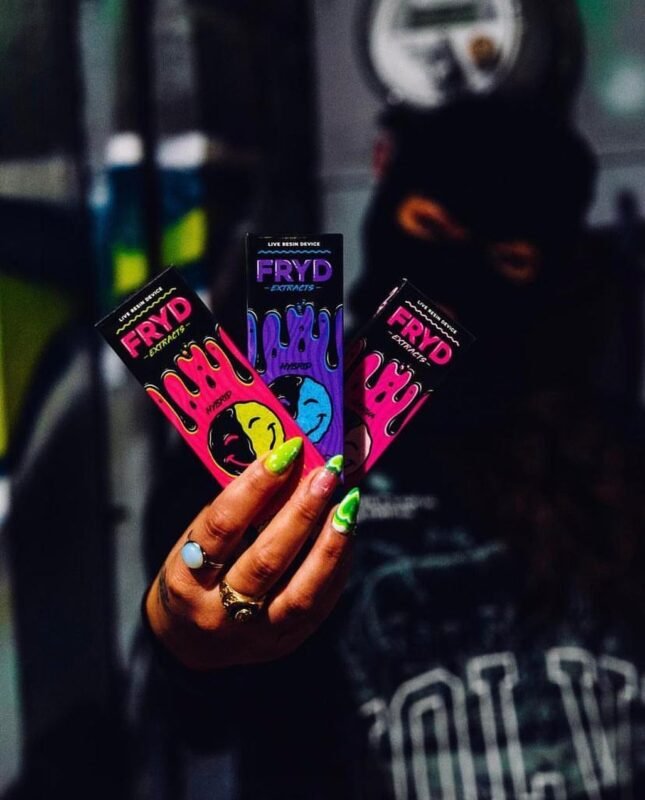
Yes, Fryd Extract products are marketed as THC-containing vape products. According to the brand’s own marketing, Fryd sells disposable vape carts built around cannabinoids including Delta-8 THC, HHC, and THCA, along with live resin blends. Officially listed potency for some product lines is described as running very high — some vendor descriptions cite THC concentrations in the 95–98.5% range for certain distillate-based products, and separate marketing has referenced levels around 70–90% THC for other lines.
That said, the more useful — and more complicated — question isn’t just “does it contain THC,” but “which form of THC, from where, and can you actually trust the label?” That’s where things get more complicated.
Not All “THC” Is the Same
One detail that trips up a lot of buyers is that “THC” isn’t a single, uniform thing. Fryd’s product lineup spans several distinct cannabinoids, each with different legal status, potency, and effects:
- Delta-9 THC — the compound most people mean when they say “THC.” It’s the primary psychoactive component of the cannabis plant and is federally regulated as a controlled substance in the U.S. except where state cannabis programs allow it.
- Delta-8 THC — a cannabinoid that’s chemically similar to Delta-9 but produces milder psychoactive effects. Delta-8 exists naturally in cannabis only in trace amounts, so most commercial Delta-8 products are synthesized from CBD extracted from hemp — a process that involves chemical conversion, not simple extraction.
- HHC (hexahydrocannabinol) — a hydrogenated form of THC, also typically produced synthetically from hemp-derived CBD, marketed as producing euphoric or relaxing effects with a longer shelf life than Delta-8 or Delta-9 products.
- THCA (tetrahydrocannabinolic acid) — the raw, non-intoxicating precursor to THC found in unheated cannabis plants. THCA converts into psychoactive Delta-9 THC when heated (as happens when it’s vaped or smoked), which is why THCA products are sold in some jurisdictions under hemp-related legal frameworks despite ultimately producing an intoxicating effect when used.
This distinction matters enormously for legality. Because U.S. federal law (via the 2018 Farm Bill) defines legal hemp based on Delta-9 THC concentration by dry weight, many of these derivative and synthetic cannabinoids have been sold under a legal gray area — technically derived from “hemp,” while still producing psychoactive effects similar to traditional cannabis. State laws on Delta-8, HHC, and THCA vary considerably, and some states have moved to explicitly restrict or ban these products even where cannabis itself remains illegal or tightly regulated.
Why “Real or Fake” Comes Up So Often With This Brand
Fryd Extract has become widely recognized as a brand that’s popular among counterfeiters. Multiple independent reviews and vape industry sources describe Fryd as commonly associated with unregulated or “street brand” status, noting that it isn’t officially licensed as a cannabis brand in any U.S. state’s regulated cannabis market. Because Fryd operates largely outside the traditional licensed-dispensary supply chain, and because its branding has become highly recognizable, it has become a frequent target for counterfeit versions sold under the same name and packaging.
This creates a genuinely tricky situation for consumers: even if the authentic version of a Fryd product contains exactly what its packaging and lab reports claim, there’s a substantial and well-documented risk that any given Fryd-branded cart you encounter — especially one purchased outside of the brand’s official website or a licensed retailer — may not be authentic at all, and may contain something entirely different from what’s advertised.
The Bigger Safety Question: What Else Might Be in the Cart
This is where the question “does Fryd have THC” connects to a much more serious public health issue. Vaping products broadly — and THC vape products specifically — have been at the center of major health warnings over the past several years.
In 2019, the U.S. Food and Drug Administration issued a consumer safety alert specifically warning the public to stop using THC-containing vaping products amid a nationwide outbreak of severe lung injuries. By that October, the CDC had documented over 1,000 cases of vaping-related lung injury across 48 states, along with dozens of confirmed deaths.
Subsequent investigation by the CDC identified vitamin E acetate — a thickening agent sometimes used to dilute THC vape oil — as a key substance strongly linked to the outbreak, which became known as EVALI (E-cigarette or Vaping product use-Associated Lung Injury). Notably, the FDA specifically flagged that most patients affected by these illnesses reported using THC-containing vape products, and many of those products were obtained through informal or illicit channels rather than regulated dispensaries.
This history is directly relevant to unregulated or street-brand products like Fryd. Reviews examining Fryd Extract specifically note that, because the brand isn’t part of a licensed cannabis regulatory framework in any state, there’s no guaranteed independent lab testing verifying what’s actually inside a given cart — meaning consumers generally can’t verify potency, purity, or the presence of harmful additives with confidence.
Some Fryd-focused safety guides explicitly reference the EVALI outbreak and vitamin E acetate as a specific concern when discussing counterfeit or informally sourced THC cartridges, advising buyers to avoid informal sourcing entirely.
Beyond diluting additives, counterfeit and unregulated vape cartridges more broadly have been found to contain other concerning substances, including pesticide residue and heavy metals, which can end up in the oil either through contaminated source material or from cheaply manufactured cartridge hardware.
What Fryd’s Own Marketing Says About Testing
To its credit, Fryd’s own marketing materials claim that its products undergo third-party lab testing for cannabinoid content, potency, pesticides, heavy metals, and other contaminants, with results made available via a QR code on the packaging. The brand also directs customers to purchase only through its official website or listed authorized partners specifically to avoid counterfeit products.
If accurate and verifiable, that kind of testing and transparency is a meaningfully positive practice. But it also underscores the core issue: because Fryd is not part of a regulated, government-overseen cannabis testing and distribution system, consumers are left relying entirely on the brand’s own claims and self-published lab results rather than an independent regulatory body — and that distinction matters even more when counterfeits using the same branding and QR-code-style verification tricks are already circulating in the market.
How to Protect Yourself If You’re Considering a Fryd Product
Given everything above, a few practical points are worth keeping in mind:
- Understand what cannabinoid you’re actually buying. “Fryd Extract” isn’t one uniform product — check whether a specific listing is Delta-8, HHC, THCA, or another cannabinoid, since legality and effects differ meaningfully between them.
- Check your local laws. Legal status for Delta-8, HHC, and THCA products varies significantly by state, and some jurisdictions have banned or restricted these products even where regulated cannabis is legal.
- Buy only from the official source or clearly licensed retailers. Given how common counterfeiting is with this specific brand, purchasing from unofficial or unverifiable sellers substantially raises your risk of getting a product that doesn’t match its label.
- Verify lab results independently when possible, rather than assuming a QR code or “lab tested” claim is automatically legitimate — some counterfeiters mimic these verification systems too.
- Be aware of the EVALI history. The 2019 vaping lung injury outbreak was specifically and strongly linked to THC vape products obtained outside regulated dispensaries, which is directly relevant to any unregulated or semi-regulated brand.
- When in doubt, prioritize licensed dispensary products in states where regulated cannabis is available, since these go through mandatory, government-audited lab testing that brands like Fryd, operating outside that system, don’t have to meet.
Bottom Line
So, does Fryd Extract have THC? Based on the brand’s own marketing, yes — its product lineup includes Delta-8 THC, THCA, and HHC across various disposable vape and cartridge products, with some lines advertising very high potency. But the more consequential question for anyone considering these products isn’t just whether THC is present — it’s whether a given cart is authentic, whether it’s been independently and reliably tested, and whether it was sourced through a channel with real accountability. Given the brand’s well-documented exposure to counterfeiting and its position outside state-regulated cannabis markets, that verification step deserves at least as much attention as the THC percentage on the label.
